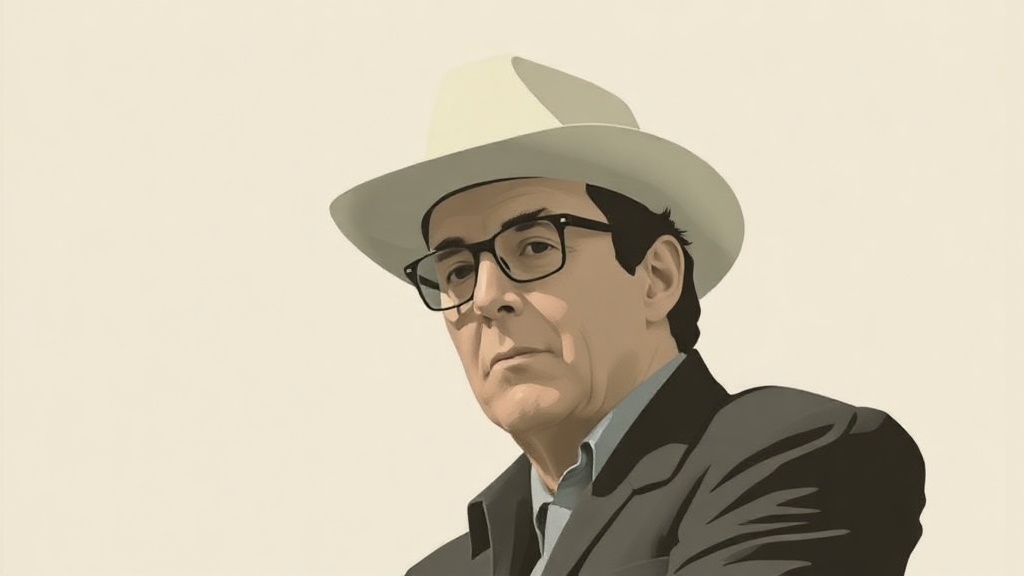
Ben Jones, 'Dukes of Hazzard' Star and Georgia Congressman, Dead at 84
Ben Jones — the character actor who spent seven seasons under the hood of the General Lee as Hazzard County mechanic Cooter Davenport, then traded the garage for Capitol Hill — died Sunday at home. He was 84. [1]
His wife, Alma Viator, announced the death on Facebook. "Ben passed from a massive heart attack," she wrote. "He was home resting in his favorite chair waiting for the Braves to come on and whoop the Yankees. Ben had the most amazing, rich, full life. He loved and was loved by so many." [2]
From Bootlegger Films to Hazzard County
Jones's path to The Dukes of Hazzard ran through a 1975 United Artists film called Moonrunners, a rollicking story of bootleggers written and directed by Gy Waldron, starring Jim Mitchum and featuring narration by country singer Waylon Jennings. Jones played a federal agent in that picture. [1]
When Waldron reconceived Moonrunners as a CBS television series, Jones and Jennings both made the jump, joining Tom Wopat, John Schneider, Catherine Bach, Sorrell Booke, Sonny Shroyer and a 1969 Dodge Charger that would become one of the most recognizable cars in television history. [1]
The show premiered in January 1979 and ran through February 1985 — seven seasons in all. At its peak, The Dukes of Hazzard ranked No. 2 in the Nielsen ratings for the 1979–80 season, trailing only Dallas, which followed it on Friday nights on CBS. [1] Jones appeared in 141 or 142 episodes, depending on the source, as Cooter Davenport, owner of Cooter's Garage on Hazzard County Square, directly across from the sheriff's office. [1][2]
His character's CB handle was "Crazy Cooter," and his signature radio greeting — "Breaker one, breaker one, I might be crazy, but I ain't dumb" — became a catchphrase of the era. [1]
"It plopped down in the very county where I was living, about 40 or 50 miles outside of Atlanta," Jones recalled of the show in a 2021 interview. [1]
A Political Career as Colorful as His TV One
The show's popularity gave Jones a platform he used in an unexpected direction: Democratic politics in Georgia. He ran for Congress in 1986 and lost a tight race to Republican incumbent Pat Swindall for the seat in Georgia's 4th Congressional District. Two years later, after Swindall faced accusations of lying to a federal grand jury about dealings with an undercover agent posing as a money launderer, Jones ran again and won by 20 points. [1][2]
On the campaign trail, Jones was characteristically candid, admitting he had "more skeletons in my closet than the Smithsonian," including a past struggle with alcohol — though he noted he had been sober since September 1977. [1]
He was re-elected in 1990. Redistricting eventually cost him his seat, and he lost his next race to Newt Gingrich in 1994. [1][2] But Jones's influence on Gingrich's career didn't end there: an ethics complaint Jones filed against Gingrich contributed to Gingrich's resignation as House Speaker in 1998. [1] Jones made one more congressional run in 2002 from Virginia, losing to Eric Cantor; more than a decade later, a letter Jones wrote blasting his former opponent was credited by pundits with helping fuel Cantor's stunning primary defeat in 2014. [1]
Jones drew an amused parallel between his two careers. "People ask me in Washington if I'm doing any acting anymore. More than ever," he said in a 1989 interview. "The skills I learned on stage and in film are invaluable in politics, because we're talking about communication and being comfortable around a camera, being in front of an audience, finding that bond, that chemistry." [1]
Life imitated art when the 1997 telefilm The Dukes of Hazzard: Reunion! revealed that Cooter Davenport had become a congressman — mirroring Jones's own trajectory. [1]
A Life That Began Without Electricity or Running Water
Ben Lewis Jones was born August 30, 1941, in Tarboro, North Carolina, the third of four sons. He grew up in Portsmouth, Virginia, where his father worked for the Atlantic Coast Line Railroad. The family lived in a railroad section house near the docks that went without electricity or indoor plumbing for years. [1]
He began drinking at 16 and, by his own account, spent years drifting, though he graduated from Woodrow Wilson High School in 1959 and eventually studied radio, television and motion pictures at the University of North Carolina. [1]
"I would volunteer for every student project, every off-the-wall experimental play and anything else around at which I could throw my inexperience and zeal," he wrote in his 2008 memoir, Redneck Boy in the Promised Land. "I had found something I thought I was good at. Something besides drinking." [1]
Before Dukes, Jones built a modest film résumé that included Smokey and the Bandit (1977), The Bingo Long Traveling All-Stars & Motor Kings (1976) and The Lincoln Conspiracy (1977). After the series ended, he played a media adviser in Mike Nichols's Primary Colors (1998). [1]
Keeping Hazzard County Alive
Jones never fully left Cooter behind. He fronted Cooter's Garage Band, which performed at concerts, fairs and festivals; operated Cooter's-branded theme stores and Hazzard museums in Tennessee and Virginia; and organized annual fan gatherings called Dukesfest and Hazzard Homecoming. [1]
Tom Wopat, who played Bo Duke alongside Jones for seven seasons, paid tribute on Instagram. "Ben Jones was a fine friend and a fierce advocate of all the best things we can offer in the entertainment business," Wopat wrote, adding: "Denver Pyle frequently said to Ben, 'I'm not your Uncle Jesse!' But I feel like we lost a Duke cousin today." [2]
Jones is survived by his wife, Alma Viator, whom he married in 1992, and his children Rachel and Walker. [1]
What to Watch
No memorial service details have been announced. Tributes from the surviving Dukes of Hazzard cast and from former congressional colleagues are expected in the coming days. Jones's dual legacy — as a beloved character actor and as a surprisingly consequential political figure whose feuds with Gingrich and Cantor reverberated for decades — will likely shape how both Hollywood and Washington remember him.


