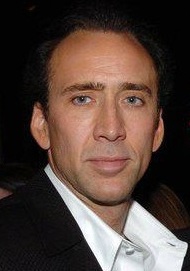
Chuck Russell, the director whose genre-spanning career produced some of Hollywood's most commercially and culturally durable films — from the Freddy Krueger revival of A Nightmare on Elm Street 3: Dream Warriors to the Jim Carrey blockbuster The Mask — died Wednesday at his home in a San Diego suburb. He was 74. [1]
His wife, Ania, told The Hollywood Reporter that she found him unresponsive and called 911; fire department personnel were unable to revive him. [2] His death was also confirmed by his attorney. [1]
A Career Built on Visual Ambition and Star-Making
Russell was born Charles Raymond Russell on May 9, 1952, in Park Ridge, Illinois, and attended the University of Illinois, where he wrote and directed one-act plays. [2] He broke into the industry in the mid-1970s as a production assistant and second assistant director on low-budget independent films, including Cannonball! and Bobby Jo and the Outlaw, both released in 1976. [2]
His early producing work brought a pivotal connection: while serving as executive producer on the 1981 horror film Hell Night, Russell met a young production assistant named Frank Darabont. [1][2] The two would go on to collaborate repeatedly over the following decades, co-writing the 1988 remake of The Blob and later serving together as executive producers on Michael Mann's 2004 thriller Collateral. [2]
Before stepping behind the camera as a director, Russell wrote the screenplay for the 1984 Dennis Quaid horror-thriller Dreamscape. [1] His directorial debut came with New Line Cinema's A Nightmare on Elm Street 3: Dream Warriors (1987), which not only reinvigorated the Freddy Krueger franchise but grossed approximately $44.8 million — nearly as much as the first two installments combined. [2] The film also served as the launching pad for Patricia Arquette's acting career. [1]
'The Mask' and the Art of the Blockbuster
Russell's most commercially successful film arrived in 1994. Made for $18 million, The Mask grossed $351.6 million worldwide and earned an Oscar nomination for best visual effects, achieved in collaboration with George Lucas's Industrial Light and Magic. [2] The film cemented Jim Carrey as a household name and introduced Cameron Diaz to moviegoers in her screen debut — a casting choice Russell said he had to fight for. [1][2]
"The chemistry was so strong between her and Jim in the readings, I just had to fight for Cameron in that role," Russell said in a 2022 interview. [2]
Carrey, in a statement released after Russell's death, remembered the director warmly. "I consider it a privilege to have worked with Chuck Russell, who during the shooting of The Mask created an ebullient, childlike atmosphere of wonder and camaraderie on his set," Carrey said. "Every one of us has been many years blessed by that buoyant and timeless moment. I consider The Mask one of the jewels of my creative life." [2]
Behind the scenes, Russell pushed the film's technical boundaries in unexpected ways. The oversized teeth that defined the masked character were originally intended only for silent scenes, but Carrey learned to speak with them in place, making the character more cartoonishly expressive. [2]
Genre Versatility as a Guiding Principle
Russell consistently resisted being pigeonholed. After The Mask, he directed the 1996 Arnold Schwarzenegger action vehicle Eraser and then The Scorpion King (2002), which gave Dwayne Johnson his first prominent leading role. [1][2] He also produced films in the 1980s including Girls Just Want to Have Fun (1985) and Rodney Dangerfield's Back to School (1986). [2]
He described his eclectic output in characteristically self-deprecating terms. "I always compare a career in films to running away to join the circus; every movie is an entirely different experience," Russell said. "People have mentioned in my career how people have done different genres. I started in horror, so people thought I was going to stick with that and become like a John Carpenter. I love movies, I'm a movie fan, and I think I would get horribly bored if I just stuck with one genre." [2]
That philosophy extended to his philosophy of performance. "We have to humanize these things, whether it's action or comedy or drama," he told Variety in 2024. "You gotta get into your performers' heads. You gotta get their actual personality into their performances." [1]
Later Work and a Turn Toward AI
After a lengthy hiatus from directing, Russell returned with I Am Wrath (2016) and Paradise City (2022), both starring John Travolta, as well as the Indian action-adventure film Junglee and a 2024 remake of Witchboard, which he also wrote. [1][2]
In what would be among his final professional announcements, Russell revealed two new productions — Hyperia and b — developed through his AI company, Neumorphic. The company stated the projects were "built with generative AI across their entire production pipeline," signaling that Russell was actively exploring the frontier of filmmaking technology at the time of his death. [1]
Survivors and Legacy
Russell is survived by his wife of nearly 19 years, Ania; his children Logan, Riley, and Carlyn; and his sister, Anne. [2]
His career traced an arc from the scrappy independent film world of the 1970s through the peak of Hollywood blockbuster filmmaking in the 1990s and into the emerging era of AI-assisted production — a range that mirrored his own restless creative instincts.
What to watch: Whether the two AI-assisted productions Russell announced through Neumorphic — Hyperia and b — will move forward under new creative leadership, and how his collaborators and the broader industry will reflect on a career that quietly shaped some of the most recognizable films of the past four decades.