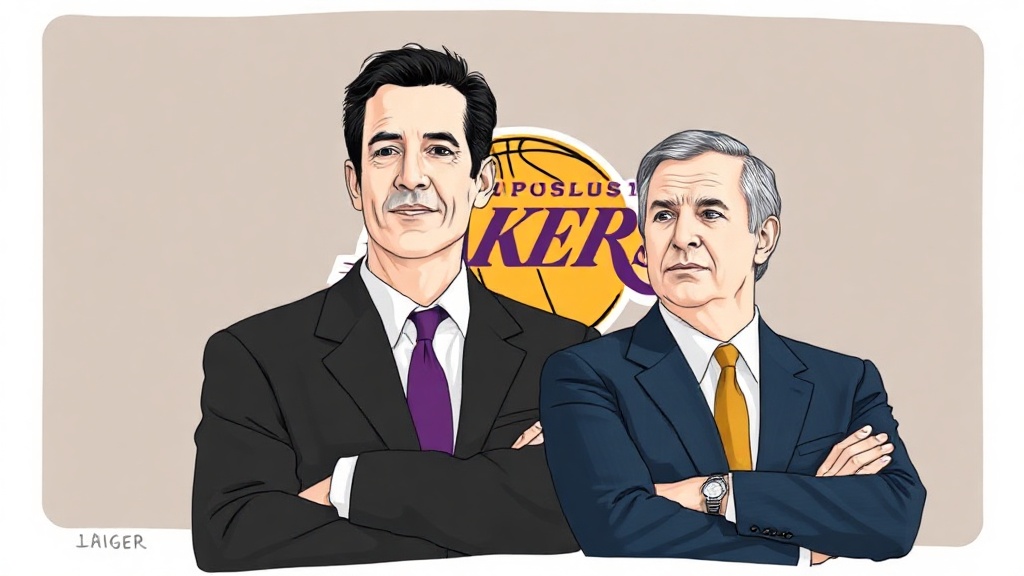
A reported deal to sell the Los Angeles Lakers to venture capitalist Josh Kushner and former Disney CEO Bob Iger for more than $12 billion would shatter every previous valuation record for an NBA franchise — if the league's Board of Governors signs off [1].
How the Deal Came Together
The seller is Mark Walter, who acquired a controlling interest in the Lakers from the Buss family as recently as last October [1]. Walter, who also owns the Los Angeles Dodgers and holds stakes in several other professional sports teams, has now agreed to part with the storied franchise after less than a year as its controlling owner [4].
The buyer group represents an unlikely pairing of two of the most prominent names in American business. Kushner runs Thrive Capital, a venture firm that manages more than $50 billion in assets and earlier this year closed its largest fund ever at more than $10 billion [1]. Iger spent the better part of two decades leading Walt Disney Company — serving as CEO from 2005 to 2020 and again from 2022 until March of this year — overseeing landmark acquisitions of Pixar, Marvel Entertainment, Lucasfilm, and 21st Century Fox [1]. More recently, Iger and his wife, Willow Bay, purchased a controlling stake in Angel City Football Club, a women's soccer team [5].
A Pivot Away from Las Vegas
Perhaps the most striking element of the reported transaction is what it represents strategically: a sharp turn away from a plan the two men had been actively pursuing. According to the Los Angeles Times, Kushner and Iger had hired investment bankers and were in discussions about bidding for a Las Vegas NBA expansion franchise, working through a vehicle called Thrive Eternal — a company Kushner's firm established specifically to invest in iconic brands and cultural assets [1].
Thrive Eternal had already made its first move in sports, backing the San Francisco Giants with capital directed at Oracle Park and its surrounding real estate, as reported by the Las Vegas Review-Journal [5]. That groundwork suggested a serious, long-term commitment to the expansion route. The pivot to purchasing an existing — and historically dominant — franchise instead signals that when the Lakers became available, the calculus changed entirely.
A Record Price Tag in a Competitive Landscape
At more than $12 billion, the reported purchase price would set a new ceiling for NBA franchise sales [1]. The figure underscores how dramatically the value of top-tier sports properties has escalated in recent years.
The deal lands at a particularly active moment for NBA ownership. The league announced in March that it is officially exploring Las Vegas and Seattle as homes for potential expansion teams, with a decision expected before the end of the year [4]. That process has drawn serious bidders: Bill Foley, owner of the NHL's Las Vegas Golden Knights, announced his bid for a Las Vegas NBA franchise just last week, and a separate group led by former NBA star Earvin "Magic" Johnson is also eyeing an expansion bid in the market [1].
With Kushner and Iger now apparently redirecting their ambitions toward the Lakers, the Las Vegas expansion race loses two prominent potential participants — though it gains no shortage of competition.
What Iger and Kushner Bring to the Table
The reported buyer group combines complementary strengths. Iger's background is defined by brand stewardship and franchise-building at a global scale; his Disney tenure demonstrated a particular talent for acquiring culturally resonant properties and expanding their reach [1]. Kushner, meanwhile, has built Thrive Capital into one of the most influential venture firms in the country, with Thrive Eternal serving as a dedicated vehicle for exactly this kind of trophy-asset investment [5].
Together, they would be taking ownership of one of the most globally recognized franchises in professional sports — a team with 17 NBA championships and a history that runs from Jerry West and Kareem Abdul-Jabbar through Shaquille O'Neal and Kobe Bryant to LeBron James.
What Happens Next
The deal is not yet final. Before any transfer of ownership can be completed, it must clear the NBA's Board of Governors, the body that must approve all franchise sales [1]. The timeline for that review has not been publicly specified.
Observers should watch for: the Board of Governors' formal review process and any conditions it may attach; how the reported sale affects the ongoing Las Vegas and Seattle expansion deliberations, given that two prominent bidders have now shifted focus; and whether Walter, having held the controlling stake for less than a year, pursues another sports investment with the proceeds. The NBA's expansion decision, expected by year's end, may itself be shaped by how ownership dynamics across the league continue to shift [4].