A Real Person, Really Stuck — Sort Of
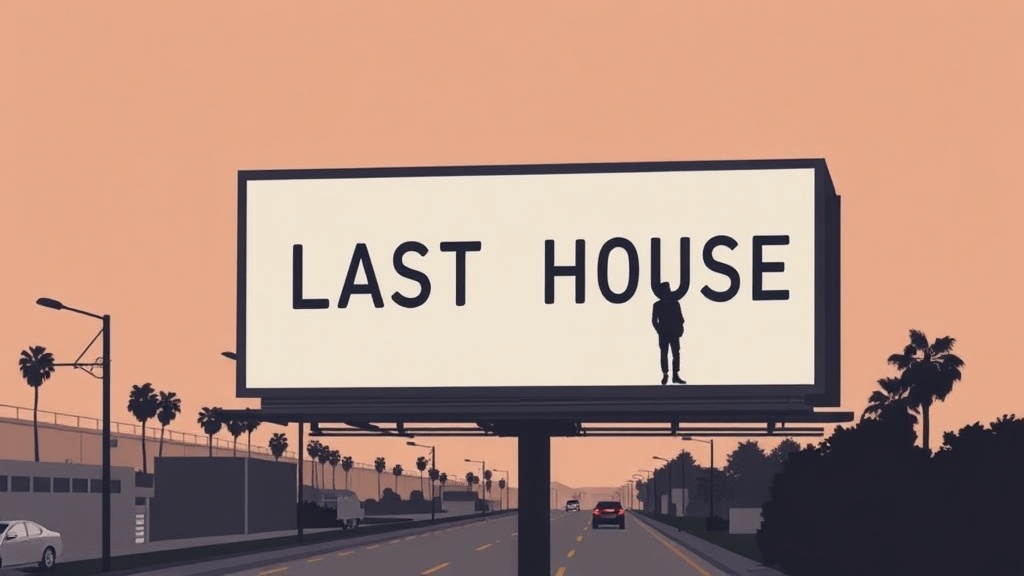
Netflix has turned one of Hollywood's most-watched stretches of road into a piece of performance art. Perched 30 feet above the intersection of Sunset Boulevard and Selma Avenue in Los Angeles, a billboard designed to look like the front of a deteriorating house contains a single, very real, very disheveled man — and he has been there since August 6 [1].
The stunt is a marketing activation for The Last House, a new Netflix thriller that began streaming on Friday, August 8 [1]. The setup is deliberately unsettling: the billboard's exterior is dressed with creeping vines, visible water damage, and a front door, while a sign facing traffic asks passersby, "How long can you survive?" [5]. Inside, the man — whose identity Netflix has not disclosed — occupies what amounts to a furnished living room set, complete with couches and pillows, while wearing a robe, t-shirt, and pajama pants [5].
Whiteboards, Coffee, and Controlled Misery
The actor's only means of communicating with the street below is a whiteboard, a deliberate callback to the film's themes of isolation and helplessness [1]. At various points he has been spotted sipping coffee and staring out the window, or holding up messages reading "What's going on?" and "Stuck in here" [5].
Netflix described the concept in a statement: "He'll attempt to maintain a sense of normalcy over extended periods of time while 'stuck' in his elevated, enclosed set 30 feet above the ground at Selma Avenue and Sunset Blvd — communicating with commuters and passersby below via whiteboard as an eerie nod to the family's own isolation in the film." [1]
One notable logistical detail: it is the same actor throughout the entire three-day run, not a rotating cast of performers working in shifts [1]. The installation ran from August 6 through August 8 [5].
What the Film Is Actually About
The Last House centers on a family of four — the Delgados — who are abruptly sealed inside their home with no means of escape [1]. As described by Netflix via Tudum, they "must work together to survive not only a lack of essentials but also the mysterious, looming threat that is keeping them trapped inside" [5]. The film stars Greta Lee and Wagner Moura and is directed by Louis Leterrier, whose previous credits include Fast X [1].
The billboard stunt mirrors the film's central premise almost point for point: one person, enclosed space, dwindling sense of normalcy, and no clear explanation for what is happening outside.
Early Reviews Are Mixed — but Not Settled
The marketing push arrives at a moment when The Last House could use some momentum. As of publication, the film holds a 36 percent positive critics' score on Rotten Tomatoes, though that figure is based on only 22 reviews and is likely to shift as more critics weigh in [1].
The Hollywood Reporter's own critic offered a more favorable read, writing that "despite its sci-fi and horror elements, [The Last House] is as much a psychological chamber drama and survival thriller about four people using their wits and dwindling resources to stay alive, even as their close-knit ties start fraying." [1]
Guerrilla Marketing With a Long Pedigree
The stunt fits into a broader tradition of experiential advertising that tries to make audiences feel something before they press play. By placing a visibly uncomfortable human being in a glass-fronted box above one of Los Angeles's most trafficked corridors, Netflix is essentially running a live preview of the film's emotional register — claustrophobia, confusion, and the creeping dread of not knowing what comes next.
Whether drivers slowing to look at the man in the billboard constitutes a traffic hazard or a marketing triumph — or both — is a question The Hollywood Reporter flagged directly, noting the installation's potential to be "traffic-stopping (or perhaps even accident-causing)" [1]. Netflix, for its part, appears to have calculated that the attention is worth it.
What to Watch Next
The immediate question is whether the stunt translates into viewership numbers when Netflix releases its next engagement report. The streamer rarely discloses real-time data, so the billboard's impact may be difficult to measure directly. More concretely, the Rotten Tomatoes score for The Last House remains in flux with a thin review count — watch for that figure to stabilize over the coming week as more critical assessments arrive [1]. If the film finds an audience despite early critical ambivalence, the Sunset Boulevard installation may be remembered as one of the more creative — if eccentric — promotional gambits of the streaming era.