China used its flagship artificial intelligence summit in Shanghai on July 17 to mount its most ambitious diplomatic push yet for an alternative global AI order — one explicitly designed to counter American-led technology restrictions that have squeezed Beijing's access to advanced chips and software [1].
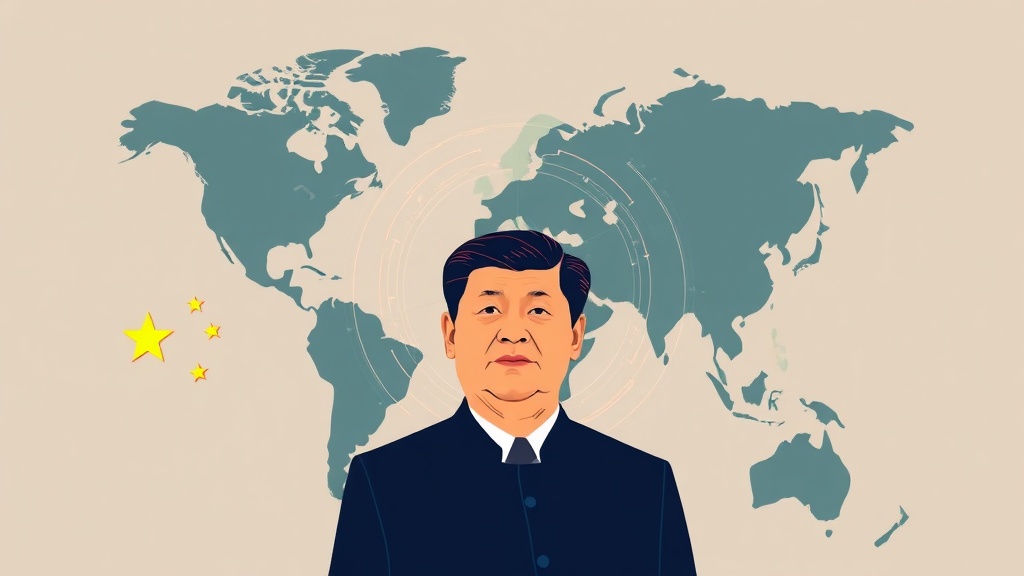
President Xi Jinping opened the annual World Artificial Intelligence Conference by framing AI governance as a matter of global equity rather than national competition, drawing attendance from the leaders of Kazakhstan, Cambodia and Thailand as well as U.N. Secretary-General António Guterres [1].
Xi's Core Message: Multilateralism Over American Dominance
Xi's keynote carried a pointed critique of Washington's export controls without naming the United States directly. "The development of artificial intelligence should not be a solo performance by any single country but rather a symphony of global cooperation," he said [1]. He went further, calling on nations to "oppose the practice of overstretching the concept of national security in the field of artificial intelligence, and of placing one's own security above that of other countries" — language Beijing has deployed repeatedly as U.S. chip restrictions have tightened [4].
The speech was paired with concrete commitments aimed at the developing world. Xi pledged that China would provide 5,000 AI training opportunities to developing countries over the next five years and grant 30 nations access to a Chinese-built AI meteorological tool capable of delivering early-warning alerts [1]. He framed deeper partnerships as a way to prevent what he called "historical injustice in AI" [5].
A New Institution to Rival Pax Silica
The most structurally significant move came before Xi even took the stage. On the eve of the conference, 29 countries — including Pakistan, Russia and Kazakhstan — signed an agreement establishing the World Artificial Intelligence Cooperation Organization, an intergovernmental body that will be headquartered in Shanghai and focused on global AI governance [1].
George Chen, partner and chair of digital practice at Washington-based consultancy The Asia Group, said the new organization is best understood as Beijing's direct answer to the U.S.-led Pax Silica initiative [4]. That American framework, launched late last year, is designed to deepen AI supply-chain collaboration among U.S. allies; its signatories include Japan, the United Kingdom, Australia, the Philippines, Israel and India [1].
Chen, who attended the Shanghai conference, also read Xi's remarks as a strategic signal to the Global South. "China will not let America be the monopoly of AI technology," he said [5]. The expansion of AI cooperation announced by Xi spans ASEAN, the League of Arab States, the African Union, CELAC, the Shanghai Cooperation Organization and the BRICS bloc — a sweep that maps almost precisely onto the countries Washington has struggled to lock into its own technology alignment [1].
It is worth noting that Chen's characterization of the new body as a geopolitical counter-move represents his analytical reading of Chinese intent, not a stated Chinese government position.
A Fragile Diplomatic Backdrop
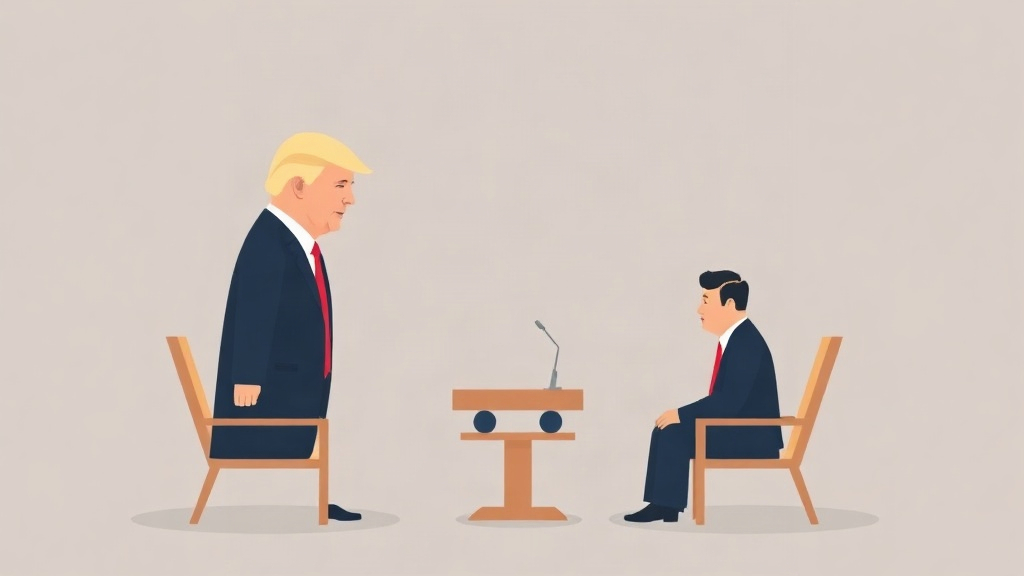
The Shanghai summit unfolded against a complicated bilateral backdrop. Following President Donald Trump's visit to Beijing in mid-May for talks with Xi, the two governments agreed to open a formal dialogue on AI development and governance [1]. That channel remains nascent, and the launch of a Chinese-led multilateral AI institution — with Russia among its founding members — is unlikely to simplify those conversations.
American restrictions on advanced semiconductor exports to China have, paradoxically, accelerated Chinese investment in domestic alternatives. Some technology analysts now regard China as a genuine AI innovator rather than a follower of U.S. advances, a shift reflected in Beijing's current five-year plan, which runs to 2030 and lists AI as a priority frontier [4].
Open-Source Models as a Soft-Power Tool
The conference also served as a showcase for Chinese AI capabilities. Huawei displayed its Atlas 950 SuperPoD computing system, while the startup Moonshot timed the release of its new Kimi K3 model to coincide with the event [1]. Moonshot claims Kimi K3's 2.8 trillion parameters make it the world's largest open-source model — a significant jump from DeepSeek's V4 Pro, which stands at 1.6 trillion parameters [5]. Last month, Zhipu (also known as Z.ai) released its GLM-5.2 open-source model, positioning it against U.S. competitors including Anthropic [1].
The open-source strategy carries particular weight in the Global South, where Chinese models are seen as more affordable and accessible than the largely closed-source offerings from American companies [4]. More than 1,100 companies and 1,400 guests participated in this year's conference, according to Chinese state media [1].
U.S. politicians and companies including Anthropic have accused Chinese AI developers of illicitly "distilling" proprietary American models to extract their capabilities — a charge Beijing has dismissed as "groundless" [5]. Washington has also raised broader concerns about Chinese AI posing an economic threat to the United States [1].
What to Watch Next
The World AI Conference runs through Monday, and further product announcements or partnership agreements could follow. More consequential in the medium term will be whether the newly formed World Artificial Intelligence Cooperation Organization attracts additional members — particularly countries that have so far avoided choosing sides in the U.S.-China technology rivalry. The pace and substance of the bilateral AI dialogue agreed to after Trump's Beijing visit will also be a key indicator of whether competition and communication can coexist, or whether the two tracks are on a collision course.