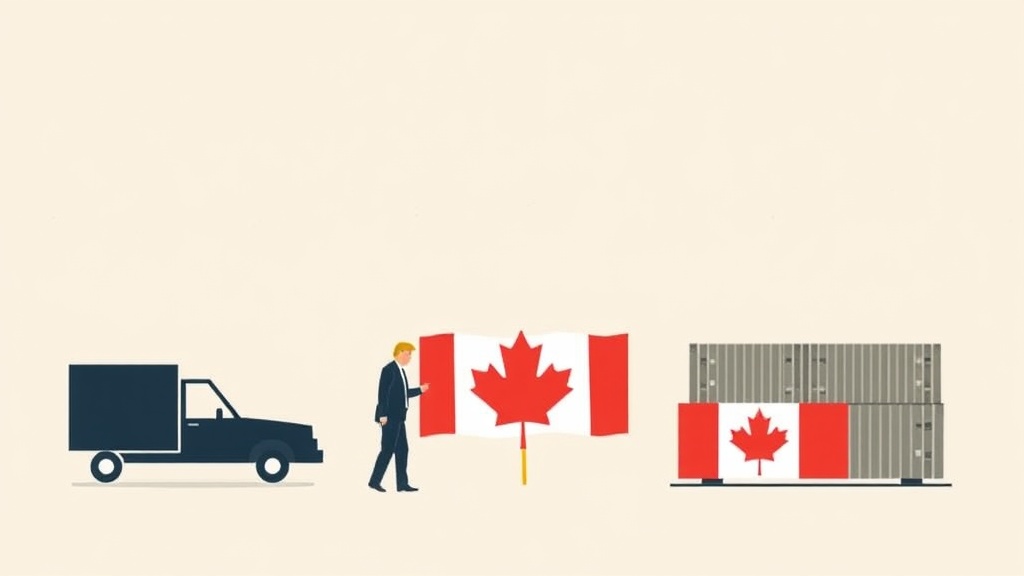
A year-long effort to stabilize trade between the United States and Canada collapsed in the final minutes of a Friday night deadline, triggering a new wave of 50% American tariffs on Canadian goods and an immediate pledge from Ottawa to retaliate in kind.
Canadian Prime Minister Mark Carney announced late Friday that he was suspending negotiations and directing his team to return to Ottawa, citing what he described as a bad-faith shift in American demands at the eleventh hour. "Last-minute changes in the US proposed terms were unfair, uneconomic, and called into question the reliability of any deal," Carney said in a statement [1]. He added that Canada's goal had always been to secure "the best possible agreement — never a deal at any price or on any deadline" [1].
What Broke Down — and Why
The collapse was striking given how optimistic both sides had sounded just days earlier. President Donald Trump had temporarily paused the tariffs earlier in the week, describing a prospective deal as "very good" for both countries [2]. Negotiators were reportedly within reach of an agreement that would have reduced US tariffs on Canadian steel and aluminum from 50% to 25%, and on Canadian autos from 25% to 15%, in exchange for Canadian provinces restoring US alcohol to store shelves [2].
Instead, the talks unraveled. US Trade Representative Jamieson Greer said in a statement issued shortly before midnight that "Canada declined to finalise the trade deal under the terms agreed earlier this week," accusing Ottawa of introducing "new demands and walk backs of other commitments" that "upended the careful balance reached in the past days" [1]. He called the breakdown "a missed opportunity for Canada" and said the US offer had included "a historic economic and national security partnership" [1].
Canadian officials offered a sharply different account, saying it was Washington that moved the goalposts. The two governments have yet to agree on a shared account of what specifically derailed the final hours of talks.
According to a senior Trump administration official, Canada had sought concessions on steel, aluminum, vehicles, and lumber that the US was unwilling to provide [1]. The US, for its part, had been pushing Canada to remove remaining retaliatory tariffs on American autos, adjust dairy quotas to allow greater access for US cheese producers, and end the ban on US alcohol sales that most Canadian provinces had imposed in retaliation for earlier tariffs [2].
The Tariffs Take Effect
With no deal in place, the 50% US tariffs came into force on Saturday morning, imposed under the Tariff Act of 1930 — a Depression-era law Trump has used repeatedly to justify sweeping import levies [2]. The new duties apply to roughly US$20 billion worth of Canadian goods annually, representing approximately 5% of what Canada ships to the US each year [1]. The affected products span a wide range, from wine, dairy, cement, and clothing to hockey sticks and tongue depressors [1][2].
These tariffs are layered on top of existing US duties already in place on Canadian steel, aluminum, autos, and lumber [2], deepening what has become a sustained assault on one of the world's most integrated bilateral trading relationships. The two countries exchanged $880 billion worth of goods and services last year [1].
Canada Vows to Fight Back
Carney was unequivocal in his response: Canada would match the US tariffs "dollar for dollar to protect our workers and businesses" [1]. He said his government would announce additional support for Canadian workers and businesses in the coming days [1].
The response drew immediate backing from Ontario Premier Doug Ford, who wrote on X: "Team Canada needs to stand together more united than ever before. The prime minister has my full support for a strong response — tariff for tariff, dollar for dollar" [1]. Ford added that "everything needs to be on the table" as Canada fights to protect its "sovereignty and economic security" [1].
Business groups on both sides of the border warned of serious consequences. Candace Laing, president and CEO of the Canadian Chamber of Commerce, called the tariffs "a body blow to North American competitiveness," warning they would raise costs for Americans while threatening Canadian customers, investment, and small businesses [1]. The US Chamber of Commerce had cautioned earlier in the week that higher tariffs would "damage both economies, drive up costs for US families, further disrupt critical supply chains, and risk the 13 million American jobs that depend on trade under the US-Mexico-Canada Trade Agreement" [2].
A Relationship Under Strain
The breakdown is the latest and most dramatic rupture in a relationship that has been deteriorating since Trump returned to office in January of last year and launched a sweeping global tariff program that dismantled decades of free trade between the US, Canada, and Mexico [2]. The future of the US-Mexico-Canada Agreement — the trilateral trade pact that underpins North American industry — is now openly in question [1].
Greer has warned that the US will not tolerate Canadian counter-tariffs. "We'll take action," he told reporters last week [2]. That threat sets up a potential escalatory cycle, with no further talks currently planned [1].
A recent poll by Canadian firm Abacus Data found that about 36% of Canadians support retaliating against US tariffs, while 30% would prefer the Carney government to continue negotiating [2] — a divided public facing a government that has now chosen the harder path.
What to Watch Next
The immediate pressure points are Carney's promised support package for affected Canadian industries and the specific scope of Canada's retaliatory tariff list. Whether either government signals a willingness to return to the table — and under what conditions — will determine whether this is a temporary rupture or a lasting realignment of North American trade. Any US response to Canadian counter-tariffs, which Greer has explicitly threatened, could escalate the conflict further and put the broader USMCA framework at serious risk.