Iran Claims Strike on US Vessel; Military Calls It a Lie
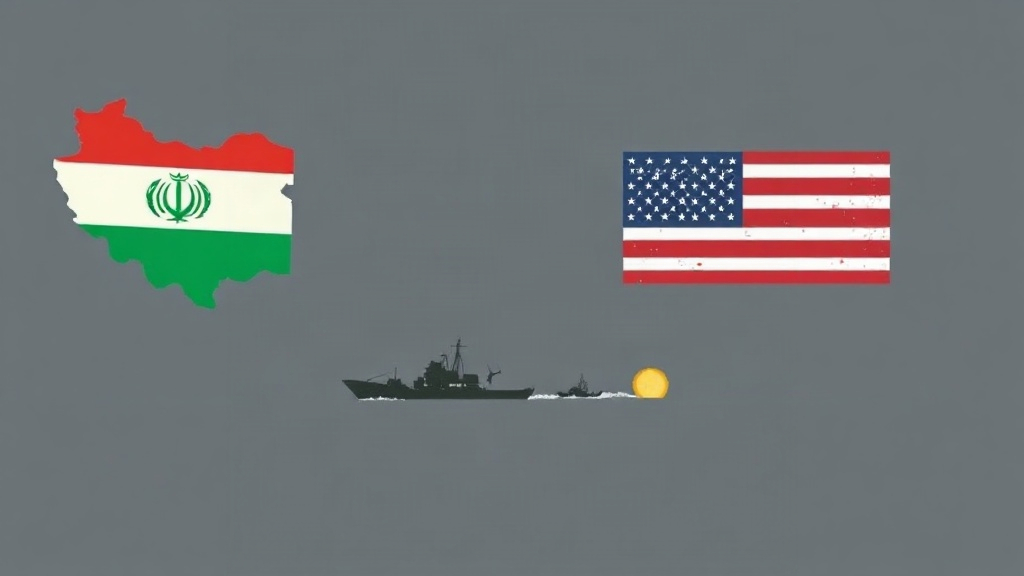
A fresh dispute over what happened in one of the world's most strategically vital waterways is sharpening tensions in the ongoing U.S.-Iran conflict. Iran announced Sunday that it had struck an unmanned American vessel attempting to enter the Strait of Hormuz — a claim the U.S. military flatly rejected as a "total lie" [3][4]. The competing accounts underscore how difficult it has become to establish ground truth as both sides wage an information war alongside a shooting one.
The alleged incident followed a significant U.S. military action just one day earlier: American forces struck three Iranian oil tankers after the Pentagon said Navy warships had been targeted with ballistic missiles [3][4]. Experts described the exchange as a dangerous escalation, particularly because Iran's previous maritime attacks had focused on commercial shipping rather than direct confrontations with U.S. naval assets [3].
Six Months of War, a Broken Ceasefire
The current conflict traces back to February 28, when U.S. and Israeli forces launched attacks on Iran [1][3]. A ceasefire agreement announced in June briefly paused the worst of the fighting, but negotiations collapsed shortly after, and on-and-off hostilities have continued ever since, with both sides seeking to inflict military and economic damage on the other [1][3].
After roughly a month of relative calm, fighting resumed last week. The Strait of Hormuz and Iranian communities along its shores have again become focal points of the violence. At least five people were killed earlier in the week during a U.S. bombardment of southern Iran [1][3].
Washington's Two-Track Strategy
The Trump administration has pursued what appears to be a dual-pronged approach to the conflict: responding militarily to Iranian provocations at the strait while simultaneously targeting the foreign financial institutions that process Iran's oil revenues [1][3]. The goal, in effect, is to squeeze Tehran economically even as the naval standoff continues.
Tehran's new hard-line senior leadership has signaled it intends to resist that pressure. Iran has spent years developing methods to circumvent international sanctions, and those same networks are now being used to work around the U.S. naval blockade of its ports. A shadow fleet of tankers continues to move Iranian crude to buyers, helping to ease some of the economic strain [1][3].
The Strait's Outsized Role in Global Energy
The Strait of Hormuz has become Iran's most potent remaining lever in the conflict. Before the war, it was regarded as an international waterway; now it sits at the center of a military standoff with profound consequences for global energy markets [1][3].
U.S. Energy Secretary Chris Wright offered a measured assessment of the situation on Sunday. Speaking to CNN, Wright said approximately 9 million barrels of oil per day are currently moving through the strait, a figure he argued should help relieve pressure on energy prices [3][4]. Factoring in pipeline flows elsewhere in the region, Wright said the total amounts to "probably two-thirds or more of pre-conflict flows" [3][4].
Those flows, however, are not moving freely. They depend heavily on U.S. Navy escorts and the protection American warships provide against potential Iranian interdiction [3][4]. Wright acknowledged the burden, saying he expected other countries to eventually join the Navy's efforts to keep the strait open — though no such commitments appear to have materialized yet [3][4].
Nuclear Talks in Collapse
Underlying the military confrontation is an unresolved nuclear crisis. Iran's nuclear program was a central factor in the outbreak of the war, and addressing it was supposed to be a priority of the diplomatic track [1][3]. The two sides signed a memorandum of understanding in mid-June, but negotiations fell apart soon after, leaving the nuclear question as unresolved as ever [1][3].
Western powers are now moving toward a multilateral response. Diplomats say the United States, Britain, France, and Germany are seeking to refer Iran to the U.N. Security Council for failing to comply with its nuclear nonproliferation obligations [1][3]. Whether that effort gains traction — and what consequences it might carry — remains to be seen.
What to Watch Next
Several threads will determine how this conflict develops in the coming days and weeks. First, independent verification of Sunday's disputed Strait of Hormuz incident will be critical: if evidence emerges supporting either Iran's claim or the U.S. denial, it will shape the next round of military responses. Second, the pace of oil flows through the strait bears close monitoring — any significant drop below the current 9 million barrels per day would send fresh shockwaves through global energy markets [3][4]. Third, the push to refer Iran to the U.N. Security Council could either open a new diplomatic channel or harden Tehran's resolve to dig in further [1][3]. And finally, whether any third-country navies agree to join U.S. escort operations will signal how isolated — or supported — Washington finds itself in policing the world's most consequential chokepoint [3][4].