US Withdraws Strategic Bombers From British Base
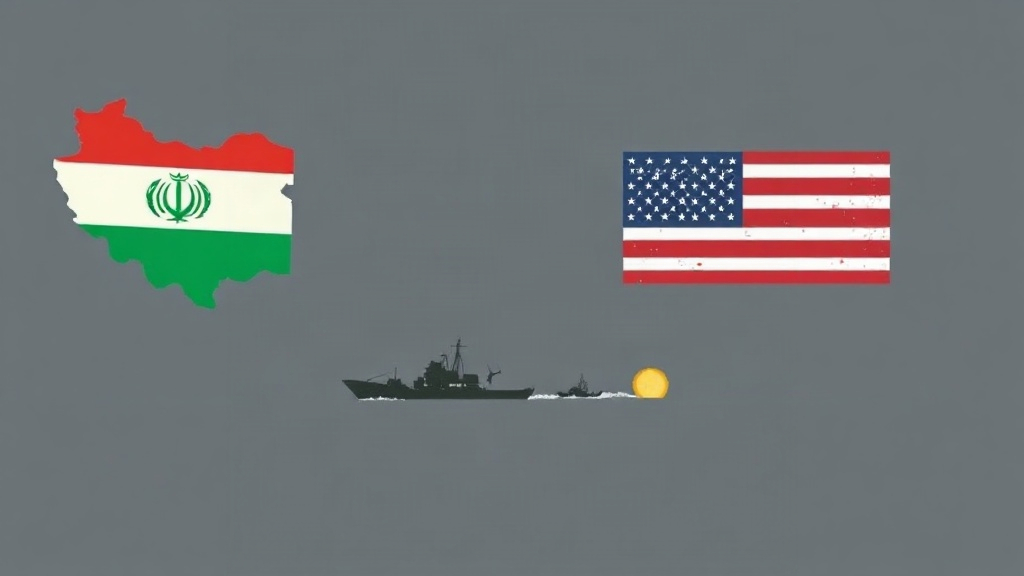
The United States has abruptly pulled its B-1 bombers from RAF Fairford in Gloucestershire following a suspected Iran-linked security incident at the Cotswolds airbase, in a move that has rattled the UK defence establishment and drawn sharp political criticism [1].
Downing Street moved quickly to insist the base remains "safe," but Whitehall sources have not disputed that Washington's decision to remove the aircraft was a direct response to the incident — and that it was a military, not a political, call, communicated from US commanders to their British counterparts [1].
What Happened at RAF Fairford
Counter-terror police are investigating an incident at the base that led to the arrest of five men on suspicion of terror offences, all of whom have since been released on bail. A sixth man, described as a UK-Iranian national, was subsequently arrested and also released on bail [1].
Prime Minister Andy Burnham said there were "strong indications" that Iran had played a part in the incident, though he stopped short of providing specific details. US Secretary of State Marco Rubio said on Fox News that the episode "clearly involve[d] the hands of a foreign actor" without elaborating further [1]. Tehran has strongly denied any involvement [1].
The New York Times, citing two US officials, reported that US commanders had received new threat intelligence about an Iran-backed plot against the base — information described as part of the same threat warnings from three weeks prior, but with specific details emerging in the 24 hours before the bombers were withdrawn [1].
A Strategic Asset, a Calculated Decision
The speed and scale of the withdrawal underscored just how seriously US military planners regard the threat. Ezra Cohen, a defence official during Trump's first administration, described the decision as "prudent," telling BBC Radio 4's Today programme: "These are very, very unique platforms that aren't being produced anymore, and we have a limited number of them. The B-1 bomber is a strategic asset, and we're going to take steps to protect it from all sorts of threats." [1]
Rubio, speaking on Monday, declined to directly link last week's incident to the withdrawal, framing it in broader operational terms. "It's not unusual to see movement of assets to different parts of the world based on exercises, redeployments, people changing out and new people coming in, new planes coming in and old planes going out," he said [1]. He added that the US retains full confidence in the security of its bases and praised British authorities for their cooperation since the incident [1].
RAF Fairford has served as a forward operating location for the US Air Force for decades. In recent months, the base had been used to fly B-1 and B-52 bombers toward the Middle East, after the UK approved a US request to use it for defensive strikes on Iran [1] — a fact that may have elevated its profile as a potential target.
Iran's Prior Warning
The backdrop to this episode is significant. In July, Iran publicly declared that "any base used for aggression against Iranian territory constitutes a legitimate target for our forces" [1]. That statement now reads as more than rhetorical posturing, given the events of the past week.
Whether the incident at RAF Fairford constitutes a direct attempt to act on that warning remains under active investigation. The involvement of a UK-Iranian national among those arrested will intensify scrutiny of Iran's alleged use of diaspora networks to conduct or facilitate operations on British soil — though no charges have yet been confirmed and all six individuals remain on bail [1].
Political Fallout
The withdrawal has exposed a fault line in the UK's defence posture. Liberal Democrat defence spokesperson James MacCleary called the US decision "deeply concerning" and demanded the government set out a concrete plan to ensure military bases are "fit for purpose" [1].
Defence Secretary Wes Streeting had sought to project confidence the previous week, stating that the UK has "tried and tested approaches to defend our bases around the country and throughout the world" [1]. But the visible departure of strategic American aircraft — witnessed by local residents who described seeing planes leaving "one, after another, after another" on Sunday — makes that reassurance harder to sustain publicly [1].
Some residents near the base expressed relief. One local told the BBC she was "thrilled" at the bombers' departure, citing both the noise and a growing sense of personal vulnerability in recent weeks [1]. Another villager, who said he had watched bombs being loaded onto aircraft from his back garden, described the moment he realised something significant was happening [1].
What to Watch Next
Several questions will define how this story develops. Investigators will need to establish the precise nature and extent of the alleged Iran-linked plot, and whether those arrested on bail face formal charges. The UK government faces pressure to explain what security failures, if any, allowed a threat to develop close enough to prompt a US military withdrawal. And the longer-term question — whether, and under what conditions, American strategic bombers return to RAF Fairford — will test the durability of the UK-US defence relationship at a moment of considerable geopolitical tension with Tehran.