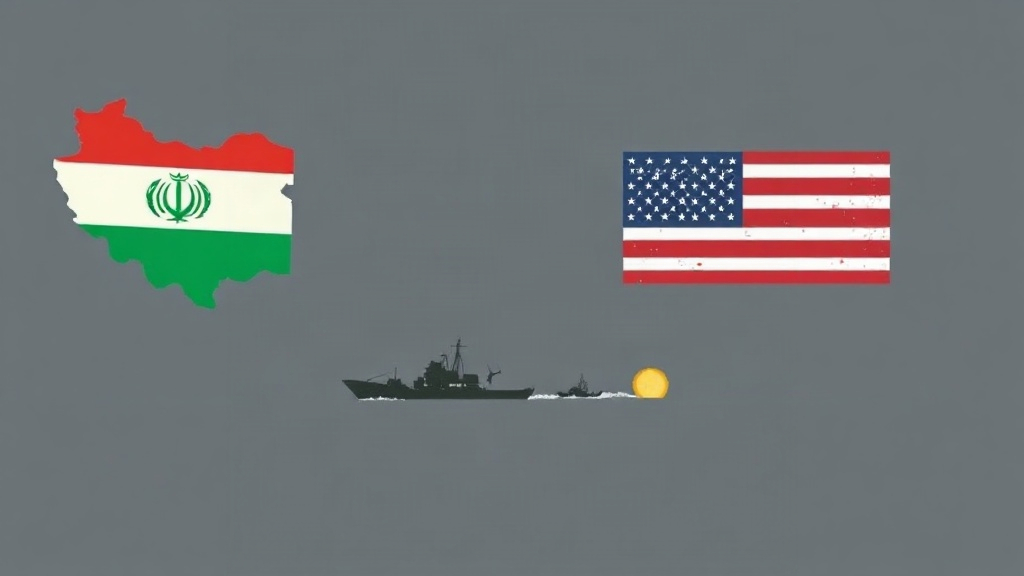
Tehran Pushes Back as Washington Vows More Economic Pressure
Iran's foreign ministry struck back sharply at the United States this week after Treasury Secretary Scott Bessent publicly boasted that American sanctions were "suffocating" the Iranian economy, with Tehran's spokesman framing the repeated use of economic restrictions not as deliberate strategy but as compulsive behavior that has crowded out genuine diplomacy.
Iranian Foreign Ministry spokesperson Esmaeil Baqaei posted the rebuke on X on August 10, responding directly to Bessent's language. "The US Secretary of the Treasury has boasted of 'suffocating' Iran through economic sanctions," Baqaei wrote. "Beyond its sheer pathos, the claim is a stark testament to America's compulsive addiction to sanctions." [1]
"Habit" Replacing Policy, Tehran Argues
The core of Baqaei's argument was rhetorical but pointed: that Washington has entered a self-reinforcing loop in which failed diplomacy triggers sanctions, and failed sanctions trigger more sanctions. "Whenever Washington proves itself incapable of pursuing diplomacy, it retreats into sanctions; and whenever those sanctions fail to produce results, it simply increases the dose," he said. "This is no longer 'policy' — it is 'habit'; and more dangerously still, it is an addiction that has displaced thought itself." [1]
Baqaei also turned the pressure back on Washington, warning that American politicians risk foreclosing their own options. "The real risk is that American politicians, clinging to this bad habit, will instead strangle their own remaining chances of a less humiliating exit from a crisis of their own making," he said. [2]
Bessent's "Economic Fury" Campaign
The exchange was triggered by remarks Bessent made on August 7, when he posted on X that Iran's growing reliance on workarounds was itself proof that American pressure was working. "The Iranian regime's reliance on digital assets and shadow banking networks is further evidence that Economic Fury is working," Bessent wrote. "We will continue to increase the economic pressure. Whether in dollars, rials, or crypto, Treasury will hunt down and dismantle the illicit financial networks that keep the regime afloat." [1]
The Treasury secretary's framing — that Iran's evasion tactics signal desperation rather than resilience — stands in direct contrast to Tehran's position that decades of surviving sanctions demonstrate the opposite. The dispute over which interpretation is correct lies at the heart of the current impasse.
A Broader Military and Diplomatic Context
The war of words over sanctions does not exist in a vacuum. According to Antiwar.com, Baqaei's post came one day after President Trump described the United States as only "semi-negotiating" with Iran while noting the country's "huge inflation" and lack of funds — language that suggested Washington intended to keep squeezing Tehran's economy even after weeks of military strikes had failed to force a capitulation. [3]
That military dimension has added urgency to the economic standoff. U.S. Central Command has claimed it has been involved in "re-directing" 55 ships as part of a continued blockade of Iranian ports since it was re-imposed last month. [3] Iranian officials have said the blockade must be lifted before the Strait of Hormuz — a chokepoint for a significant share of global oil traffic — can be reopened. [3]
Tehran has laid out a broader set of conditions for any resolution: the lifting of economic sanctions, the release of frozen Iranian funds, and compensation for war damages. [3] Washington has not publicly acknowledged those terms as a basis for negotiation.
Decades of Pressure, Unresolved Standoff
Baqaei's invocation of Iran's long history under sanctions — "Iran has demonstrated over decades that it will not be strangled by these exhausted refrains" [2] — reflects a well-worn Iranian narrative that economic isolation, however painful, has never translated into the political concessions Washington sought. Previous rounds of maximum-pressure campaigns, including those during the Trump administration's first term, did not produce a new nuclear agreement or a fundamental shift in Iranian foreign policy. [1]
The current escalation, combining military strikes, a naval blockade, and intensified financial pressure, represents a more comprehensive application of that pressure than prior efforts. Whether the cumulative weight of those tools produces a different outcome remains the central unanswered question.
What to Watch Next
Several pressure points will determine how this standoff evolves in the coming weeks. First, whether Iran moves to formally close or further restrict the Strait of Hormuz — a step it has threatened but not yet taken — would dramatically raise the economic stakes for global energy markets. Second, the status of any back-channel negotiations matters: Trump's "semi-negotiating" comment [3] leaves open the possibility that some form of talks is underway, even if neither side is publicly acknowledging substantive progress. Third, the Treasury Department's next enforcement actions under the "Economic Fury" framework will signal whether Washington is prepared to escalate further or is leaving room for a diplomatic off-ramp. Tehran's response to each of those moves will reveal whether its defiant public posture reflects genuine confidence or a negotiating position designed to extract better terms.