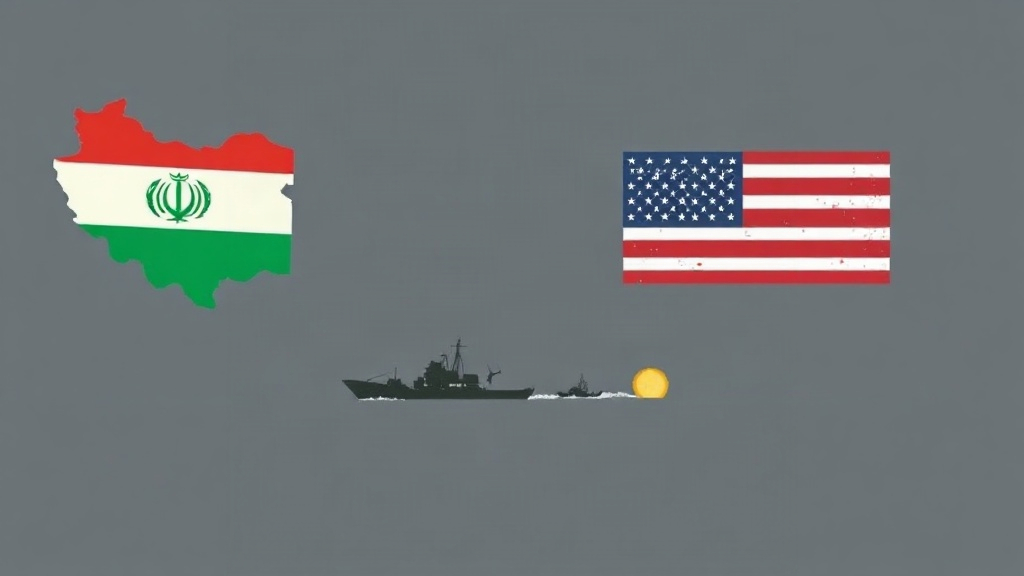
A Last-Minute Reversal on the Brink of War
Hours after the United States government warned Americans across the Middle East to prepare to evacuate, President Donald Trump announced late Saturday that he was cancelling a planned large-scale military strike on Iran, saying the two sides had agreed on the rough outline of a diplomatic deal [1]. The announcement, posted on Trump's Truth Social platform, came less than 24 hours after he told reporters at a cabinet meeting, "We'll be hitting them very hard. At some point, they're going to say, 'We just can't take it anymore'" [4].
The whiplash reversal immediately raised questions about whether a genuine diplomatic breakthrough had occurred — or whether the episode was another iteration of the high-pressure brinkmanship that has defined Trump's approach to Iran since taking office.
What Trump Claimed
In his Truth Social post, Trump said he had agreed to stand down at the request of Iran and other Middle Eastern nations to "hold off any attack in that the perimeters of a deal has been agreed to," adding that he would only honour the pause if a final agreement was concluded "rapidly" [1]. He described the prospective deal as delivering the "Immediate, Complete, and Total OPENING OF THE HORMUZ STRAIT" and an end to what he characterised as "Iran's nuclear threat" [1].
Trump framed the decision in sweeping terms, saying cancelling the attack would be "for the future benefit of the world and, likewise, the survival of a successful and prosperous Iran," while simultaneously asserting that the US was "locked and loaded and ready to go against the Islamic Republic of Iran, at levels of Military Terror, Strength, and Power not seen since World War II" [4].
Tehran Pushes Back
Iran's government flatly rejected Trump's account. The semi-official Mehr news agency denied that Tehran had asked Washington to hold off on military action, calling Trump's claims "nothing but a new lie" [4]. Iran's acting Defence Minister Majid Ibn al-Reza struck a defiant tone, saying Tehran viewed every threat from its adversaries as "real and credible" even if it formed part of psychological warfare, and warned: "We will neither be caught off guard nor remain passive" [4].
Earlier on Saturday, Iranian Foreign Minister Abbas Araghchi had told his Saudi counterpart that any US or Israeli attack would meet a "proportionate response" [1]. The contradictory signals from Tehran — denying a request for a pause while also signalling readiness to respond militarily — left the diplomatic picture deeply ambiguous.
Saudi Arabia's Behind-the-Scenes Role
A key piece of the puzzle appears to be Saudi Crown Prince Mohammed bin Salman, who called Trump on Saturday in what the kingdom's official SPA press agency described as an effort to reduce regional tensions [4]. A source familiar with the matter told Axios that the Crown Prince urged Trump to cancel the strikes and return to negotiations [1]. In its official readout, Riyadh said the Crown Prince "emphasised the necessity of prioritising dialogue to reduce tensions and the importance of exerting all possible efforts to achieve a truce that paves the way for diplomatic solutions" [4].
The Gulf states have particular reason to seek de-escalation: while the American mainland is beyond the range of Iranian missiles, US allies such as Bahrain, Jordan, and the United Arab Emirates are not, and their critical infrastructure — including water desalination plants — could be prime targets in any Iranian counter-strike [4].
A Pattern of Escalation and Retreat
This is not the first time Trump has issued dire warnings only to pull back in favour of diplomacy. On April 7, Trump warned that "a whole civilisation will die tonight" if Iran refused to engage in peace talks, threatening to destroy civilian infrastructure — a move widely condemned as potentially constituting a war crime [4]. That threat did produce a historic round of face-to-face talks in Pakistan, led by Vice President JD Vance [4]. But those negotiations ultimately collapsed without a deal, with too many competing red lines to bridge [4].
The cycle resumed in June when a ceasefire that had paused hostilities fell apart. Since then, the US has blockaded Iranian ports and bombed Iranian sites, while Iran has fired missiles and drones at US assets across the Middle East and targeted shipping in the Strait of Hormuz [4]. Oil prices have fluctuated significantly throughout the conflict [4].
The strategy — sometimes called the "Madman Theory," in which extreme threats are used to force adversaries to the table — has produced talks but not agreements. Whether Saturday's announcement represents a genuine step toward a deal or another turn in the same cycle remains unclear.
Domestic Pressures Compound the Calculus
Trump's decision also carries significant domestic political weight. According to the Pew Research Centre, approximately 60% of Americans disapprove of the war with Iran, a figure that has contributed to the president's declining popularity [4]. Any major escalation would almost certainly drive up oil prices, squeezing US consumers further at a moment when the administration is already facing economic headwinds [4]. With midterm elections on the horizon, the political costs of a wider war are not lost on the White House [4].
The State Department had issued security alerts for Americans in 10 countries across the region on Saturday, urging increased caution and advising people to consider departing [1] — a measure that underscored how seriously Washington itself had been treating the threat of imminent conflict before Trump's reversal.
What to Watch Next
The critical question now is whether the "perimeters of a deal" Trump described can be translated into a binding agreement — and quickly, given Trump's explicit condition that any pause is contingent on rapid progress [1]. Iran's public denial that it ever requested a halt to strikes complicates the diplomatic framing on both sides. Observers should watch for any formal response from Tehran, the resumption or breakdown of back-channel talks, and whether oil markets — a reliable barometer of regional risk — price in a genuine reduction in tensions or treat Saturday's announcement with the same scepticism they have shown previous ceasefire moments.