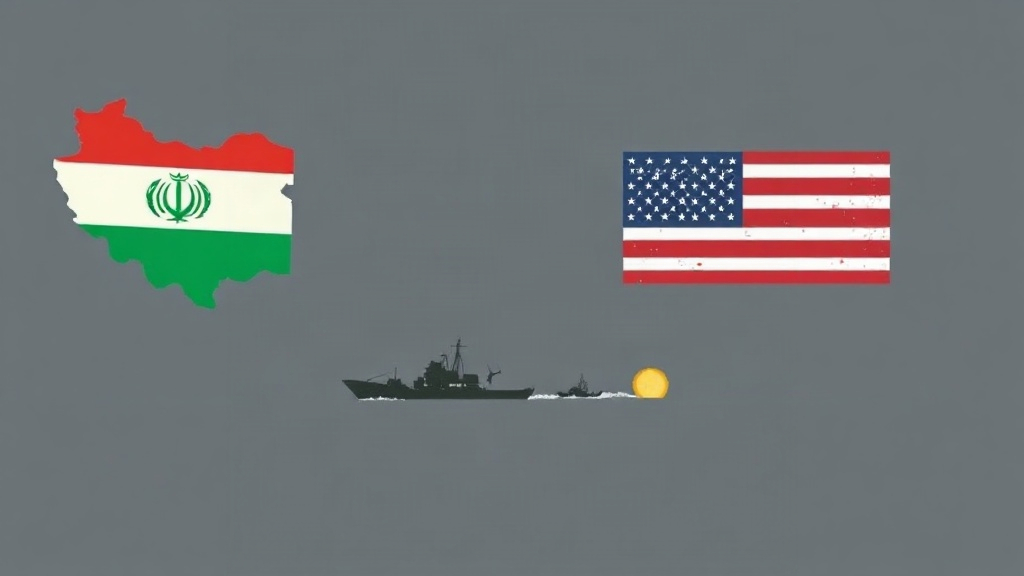
The Trump administration is moving to impose what it describes as the most sweeping economic sanctions ever leveled against Iran, with Treasury Secretary Scott Bessent scheduled to hold a press conference Monday, August 24, to lay out the specifics [1]. The announcement marks a significant escalation in U.S. economic pressure on Tehran amid an ongoing conflict that has already reshaped regional dynamics.
"Economic D-Day"
President Donald Trump framed the sanctions package in stark, historically charged terms, calling it an "economic D-Day" for Iran [1]. The language signals the administration's intent to treat the measures not as routine diplomatic leverage but as a decisive, potentially war-altering intervention conducted through financial means rather than military force.
Secretary Bessent amplified that framing, promising what he called "the greatest coordinated economic isolation in the history of the world" [5]. While the full details of which sectors will be targeted are set to be disclosed at Monday's briefing, the White House has characterized the package broadly as the "toughest sanctions in history" [6].
Allies Warned: Choose Sides
The sanctions carry an explicit secondary dimension aimed at third-party countries. According to reporting by CNBC cited in the sources, the U.S. has warned its allies that they face a binary choice: align with Washington's economic pressure campaign or risk facing penalties of their own [1]. That ultimatum extends the sanctions' potential reach well beyond Iran's borders, putting trading partners — particularly those that import Iranian oil or maintain financial ties with Tehran — in a difficult position.
This kind of secondary-sanctions architecture has been used in previous U.S. pressure campaigns, including earlier rounds of Iran sanctions and measures targeting Russia, but the administration's rhetoric suggests an unusually broad application this time around [5].
Iran's Response: "Economic Warfare"
Tehran has not responded with conciliation. Iranian Foreign Ministry spokesman Esmaeil Baqaei condemned the U.S. actions as "economic warfare" and characterized them as a violation of Iranian sovereignty [1]. The language reflects Iran's consistent framing of sanctions as an instrument of aggression rather than diplomacy — a framing that tends to harden domestic political resistance to compliance.
Iran's rhetorical posture also signals that the government is unlikely to treat the new measures as a prompt to negotiate, at least publicly. Whether back-channel discussions are underway is not addressed in the available sources.
The Strait of Hormuz: A Pressure Point That Cuts Both Ways
One of the most consequential geographic flashpoints in this standoff is the Strait of Hormuz, the narrow waterway through which a substantial share of the world's seaborne oil passes [1]. Passage through the strait has been restricted since a conflict began in February, according to the sources, though the precise nature and parties involved in that conflict are not fully detailed in the available reporting [5].
The strait's status matters enormously for global energy markets. Any further deterioration — whether through Iranian retaliation to the sanctions or an escalation of the underlying conflict — could send oil prices sharply higher and disrupt supply chains far beyond the immediate region [6]. The administration's sanctions strategy, by design, targets Iran's oil revenues; but the same geography that makes Iran vulnerable also gives Tehran potential leverage over global energy flows.
Skepticism About Effectiveness
Despite the sweeping rhetoric, outside analysts are not convinced the new measures will achieve the administration's stated objectives. Al Jazeera, as cited in the sources, reports that experts are skeptical about whether additional sanctions — even historically unprecedented ones — will produce outcomes such as regime change in Iran [1].
That skepticism has a basis in the historical record. Iran has operated under successive rounds of U.S. and international sanctions for decades, developing workarounds through third-party intermediaries, barter arrangements, and relationships with countries less susceptible to U.S. secondary-sanctions pressure. Whether the new package is genuinely more comprehensive than prior efforts, or whether it closes the gaps that allowed Iran to adapt before, will depend on details Bessent has yet to disclose publicly [5].
The administration's framing — "coordinated economic isolation" — implies multilateral buy-in, but it is not yet clear which allies have formally signed on versus which are being pressured to comply under threat of penalties [6].
What to Watch Next
Several developments in the coming days will determine how consequential this announcement actually proves to be. Treasury Secretary Bessent's Monday press conference is the immediate focal point: the specifics of which Iranian sectors are targeted, which financial institutions are designated, and which countries face secondary-sanctions exposure will define the package's real scope [1].
Beyond the technical details, watch for responses from major Iranian oil customers — particularly in Asia — and from European governments that have historically tried to maintain economic ties with Tehran while avoiding U.S. penalties. Any movement at the Strait of Hormuz, whether Iranian naval activity or further restrictions on commercial shipping, will be an early indicator of how Tehran intends to respond in practice rather than in rhetoric [5]. Energy markets will be tracking all of it closely.